

FIBER CEMENT
Fiber-reinforced cement slab is the most useful facing material. Such plates are environmentally friendly, durable, possess high fire-resistant, moisture, noise and thermal-insulating characteristics, have light weight and low price. Slabs are made of artificial material consisting of cement, moisture-repellant additives and cellulose fiber that fulfills a function of reinforcing component. External surfaces of panels are covered with protective coating of polyurethane and acryl that imitate various textures, masonry works and even wood. It allows to select panels that suit any taste
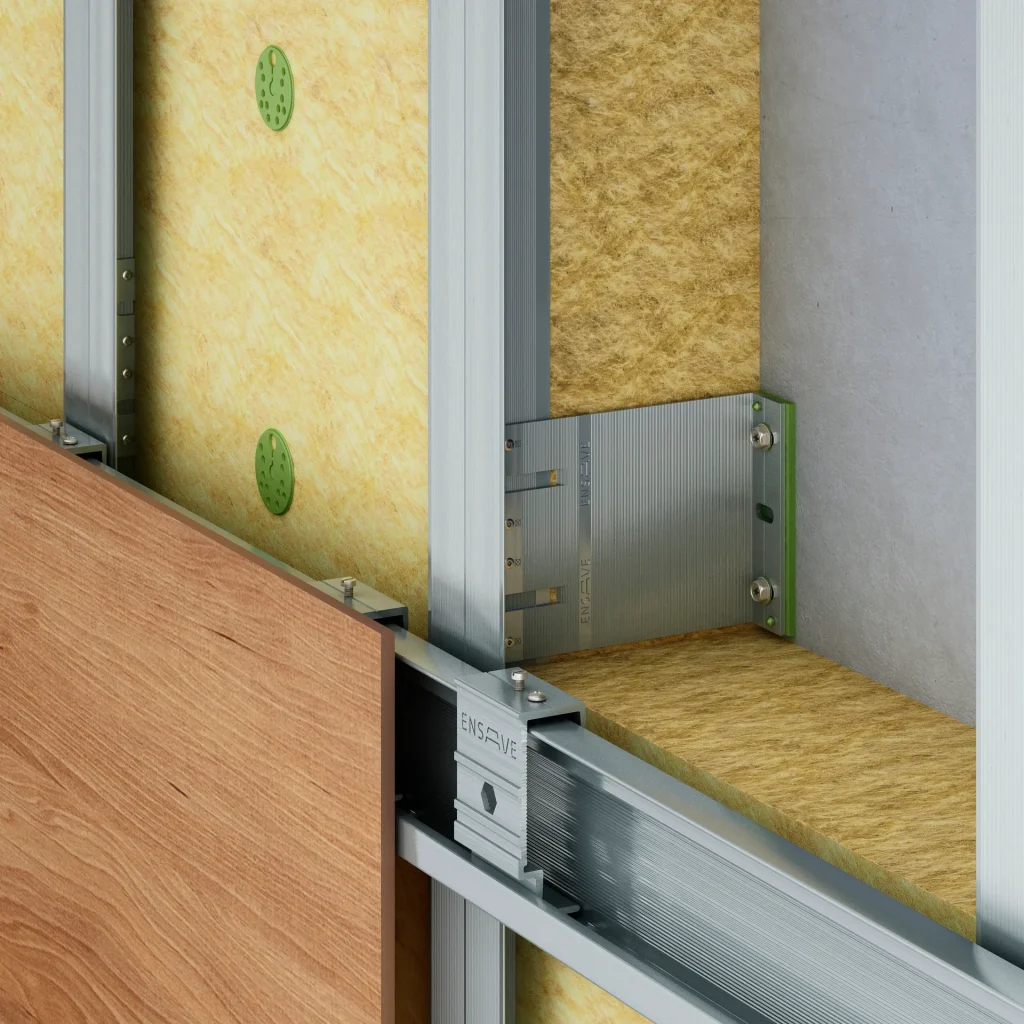
Invisible – Hangers
MVe-Light V08
The system includes aluminum wall brackets, profiles, and accessories for vertical substructures in ventilated facades. Bracket extenders allow for various cladding depths. Wall brackets come with or without isolators: With isolator: 45–305 mm, Without isolator: 40–300 mm
Available in 10, 20, or 30 mm steps, in sizes S, M, and L. Hole patterns vary for anchor or screw installation.
Brackets with isolators minimize thermal bridging, improving the building’s energy efficiency. Each bracket has fixed and sliding connection points; Fixed points support the cladding and wind loads, Sliding points absorb thermal expansion. Markings ensure correct installation.
Vertical profiles are attached using special screws or rivets. Sliding points allow movement, while fixed points secure the profile. Fastening clips assist alignment and speed up installation.
Cladding is mounted using agraffe profiles and hangers (fixed, adjustable, or sliding), enabling easy alignment and secure attachment.
Invisible – Glue (Adhesive)
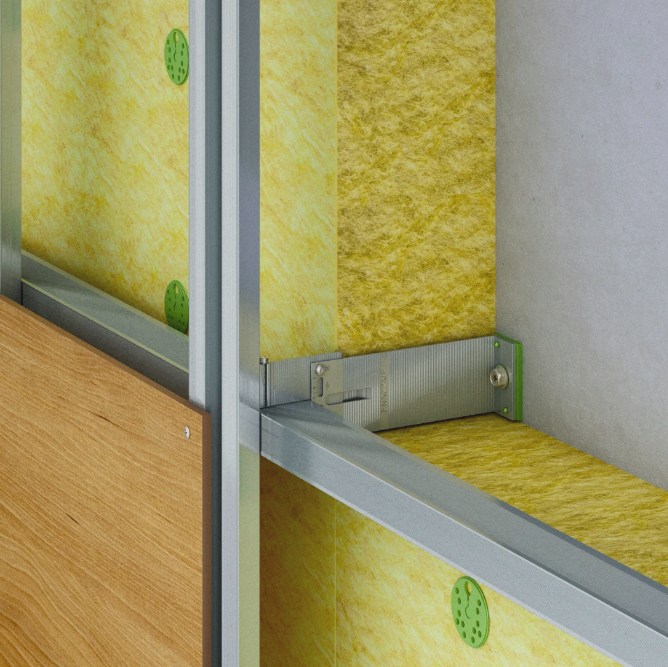
Enve-Light VO2
The system includes aluminum wall brackets, profiles, and accessories designed for vertical substructures in ventilated facades. It features bracket extenders to support various cladding depths. Wall brackets come in sizes from 45 mm to 305 mm (with isolator) and 40 mm to 300 mm (without), in 10, 20, or 30 mm steps, and in three sizes (S, M, L). They have different hole geometries for mounting with anchors or screws.
Brackets with preassembled isolators reduce thermal bridging by separating the substructure from the base material, enhancing the façade’s thermal performance.Each bracket has fixed and sliding fixing points. Fixed points support façade weight and wind loads; sliding points accommodate thermal expansion and wind loads. Marks and scales help prevent installation errors.
Vertical profiles are attached with special screws or rivets at fixed and sliding points. Sliding points allow frictionless movement, while fixed points anchor the profile. A special fastening clip helps hold profiles in place during installation, simplifying alignment and reducing mounting time.
The system supports sheet cladding panels, which are bonded directly to profiles using liquid nails and secured temporarily with double-sided adhesive tape until the adhesive cures.
Visible – rivets
MVe-Light V01
EnVe-Light V01
This aluminum system is designed for vertical substructures in ventilated facades and includes wall brackets, profiles, and accessories. Bracket extenders allow for different cladding indents from the wall. Brackets range from 45–305 mm (with isolator) and 40–300 mm (without isolator), in 10–30 mm increments, and are available in sizes S, M, and L. Hole geometries vary based on installation method—anchors or screws.
Brackets with preassembled isolators reduce thermal bridging by separating the substructure from the base wall, improving the overall thermal efficiency of the building.
Each bracket features fixed and sliding fixing points. Fixed points bear the load of the façade and wind forces, while sliding points accommodate thermal expansion and carry proportional wind loads. Special marks and scales prevent mounting errors.
Vertical profiles are attached using dedicated screws or rivets for fixed and sliding points, enabling secure connection and smooth expansion movement. A fastening clip holds the profile in place during installation, simplifying adjustment and reducing mounting time.
Cladding materials, typically sheet panels, are directly fastened to the vertical profiles using rivets or screws, ensuring a durable and efficient façade system.
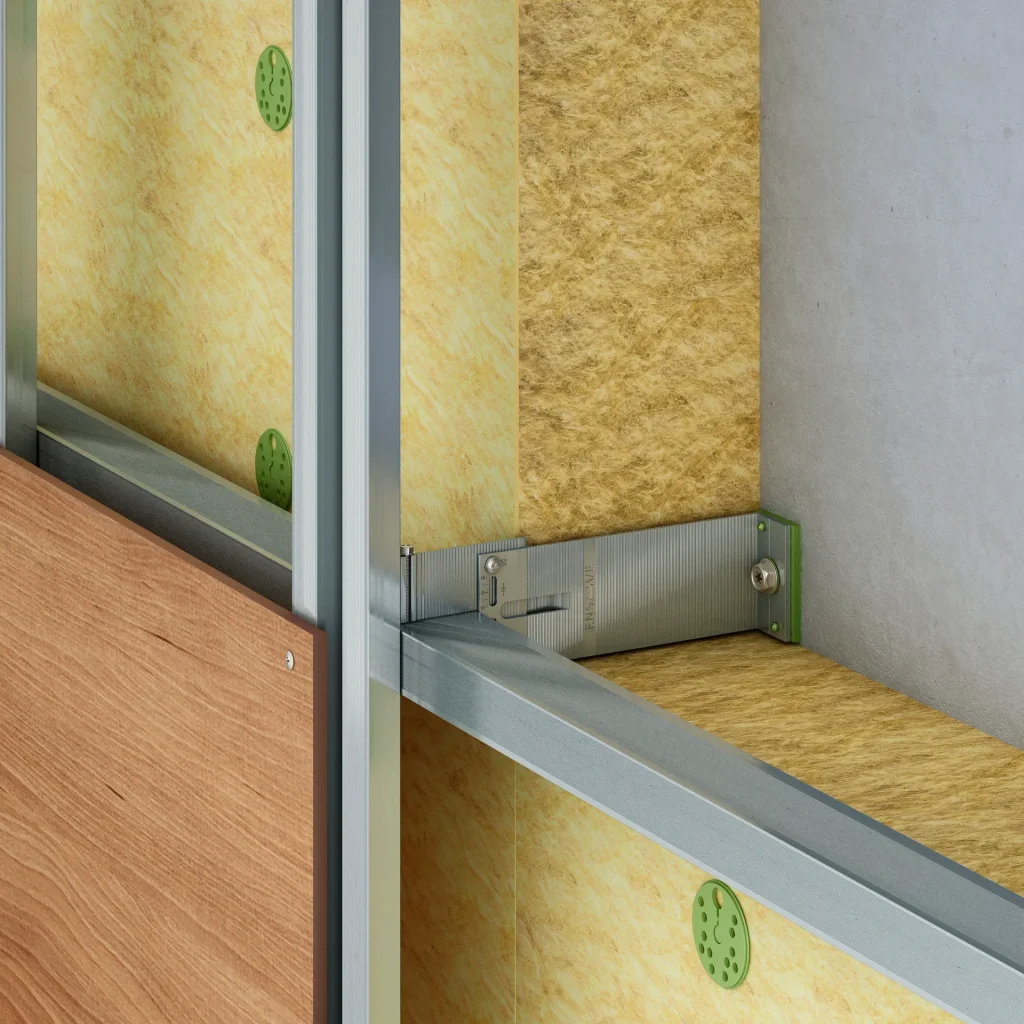
Visible – horizontal + adapter + omega
MVe-Light H01
EnVe-Light H01
This aluminum system is designed for horizontal substructures without the use of vertical guides. It includes wall brackets, a special adapter, profiles, and accessories. Brackets range from 45–305 mm (with insulator) and 40–300 mm (without insulator), in 10, 20, or 30 mm increments depending on length. The system uses size M brackets, with hole geometries in the base plate adapted for anchors or self-tapping screws.
Brackets with preassembled isolators minimize thermal bridging by separating the substructure from the wall, improving the thermal efficiency of the building envelope.
Guide profiles are connected to brackets via a specially designed adapter with a groove and a self-tapping screw. The adapter is fixed to the bracket using rivets or screws through designated holes, ensuring correct installation. Horizontal profiles are inserted into the adapter groove and secured with a screw, streamlining and accelerating the installation process.
Though the system uses only fixed attachment points, the flexible “bracket + adapter” connection compensates for thermal expansion and allows up to 60 mm of profile offset adjustment.
Sheet cladding materials are fastened directly to the horizontal guides using rivets or self-tapping screws, ensuring a reliable and efficient facade solution.