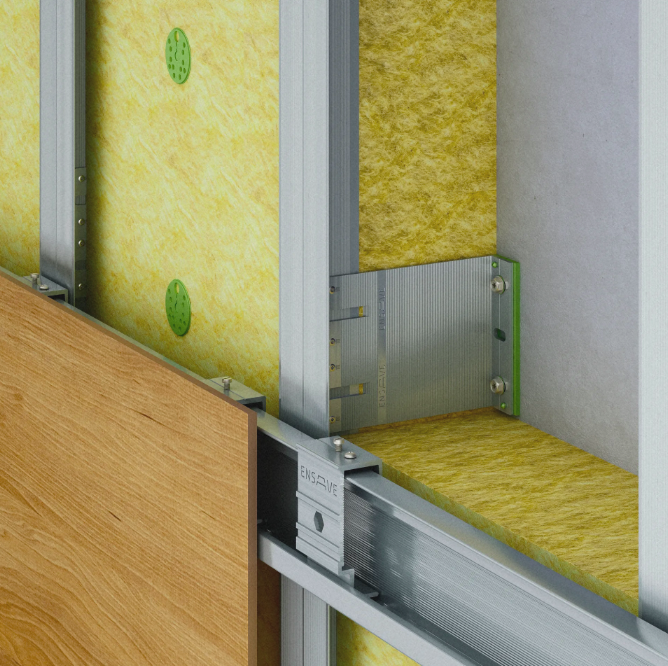

CERAMIC TILES
By ceramic cladding we mean panels made of such natural materials as quartz, clay and granite. This facing material has good strength characteristics, resistant to temperature variations, moisture attack and chemically aggressive substances. A fundamental change of building exterior as a result of façade facing with ceramic panels is possible owing to variety of surface colors, its type and texture.
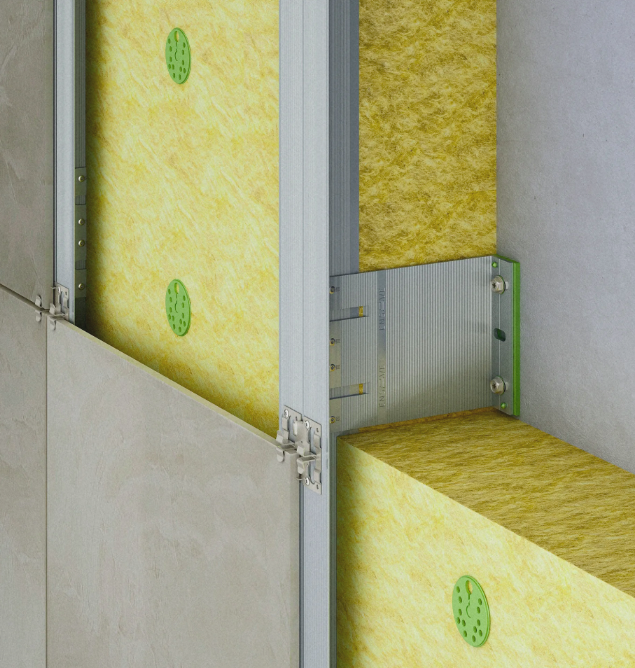
Visible – Clamps
MVe-Light V03 / EnVe-Light V03
This system includes aluminum wall brackets, profiles, and accessories designed for vertical substructures in ventilated facades. Bracket extenders allow for various cladding offsets. Brackets with isolators range from 45–305 mm; without isolators, from 40–300 mm, in 10, 20, or 30 mm increments (depending on length), in sizes S, M, and L. Hole geometries vary based on installation method—anchors or screws.
Preassembled isolators minimize thermal bridging by separating the substructure from the base wall, improving the façade’s overall thermal efficiency.
Brackets include fixed and sliding fixing points: fixed points support façade and wind loads; sliding points compensate for thermal expansion and absorb wind loads. Each point is clearly marked and scaled to prevent mounting errors.
Vertical profiles are fastened to brackets with dedicated screws or rivets. The fixed point anchors the profile, while the sliding point allows movement without stress. A fastening clip holds the profile in position during installation, simplifying alignment and reducing mounting time.
Cladding is secured using stainless steel clamps, available in various geometries depending on application. Clamps attach to profiles using rivets or self-drilling screws.
Visible – Horizontal + Adapter + Omega
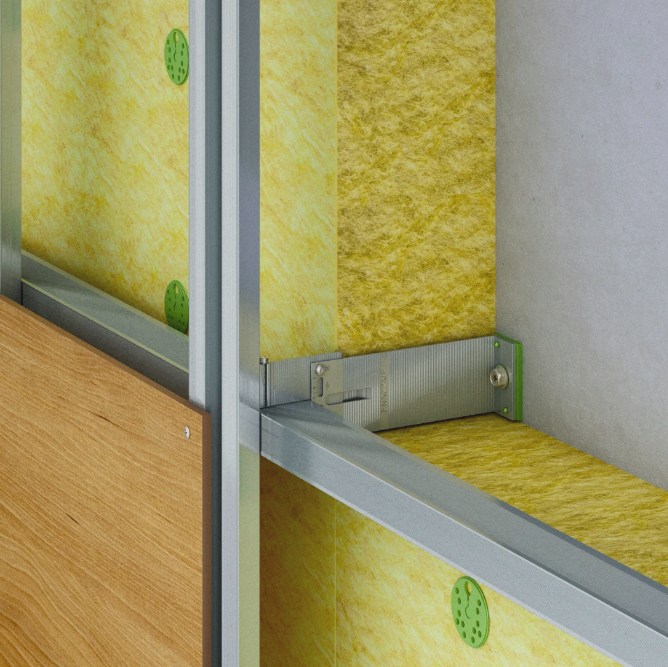
MVe-Light H01 / EnVe-Light H01
This system includes aluminum brackets, a special adapter, horizontal profiles, and accessories, designed to create horizontal substructures without vertical guides. Brackets with insulators range from 45–305 mm; those without range from 40–300 mm, in 10, 20, or 30 mm increments (based on length). Only size M brackets are used. Brackets feature different hole geometries depending on installation method—anchors or self-tapping screws.
Preassembled isolators reduce thermal bridging by separating the substructure from the wall, improving the building’s thermal performance.
The adapter, pre-installed on each bracket, connects to the horizontal guide profile. It includes a self-tapping screw and groove for profile insertion. Attachment is done via fixed holes using rivets or screws, with clearly marked fixing points to avoid installation errors.
Profiles are inserted into the adapter groove and secured with a screw, streamlining the installation process. Although it uses fixed points only, the bracket-adapter combo compensates for thermal expansion thanks to its horizontal flexibility. The design also allows up to 60 mm profile offset from the wall.
Compatible with sheet cladding materials, fastened directly to the guide profile using rivets or self-tapping screws.
Invisible – Hangers
MVe-Light V08
This system includes aluminum wall brackets, profiles, and accessories designed for vertical substructures in ventilated facades. Bracket extenders allow for various cladding offsets. Brackets with isolators range from 45–305 mm; those without range from 40–300 mm, in 10, 20, or 30 mm increments (depending on length), and are available in sizes S, M, and L. Brackets feature different base plate hole geometries for installation with anchors or screws.
Brackets with preassembled isolators reduce thermal bridging by separating the substructure from the wall, improving overall thermal efficiency.
Each bracket includes fixed and sliding fixing points: the fixed point supports façade weight and proportional window loads, while the sliding point compensates for thermal expansion. Both are marked and scaled to prevent mounting errors.
Vertical profiles attach to brackets using special screws or rivets. The fixed point holds the profile in place; the sliding point allows movement without stressing the substructure. A fastening clip on the bracket secures the profile during installation, simplifying adjustment and reducing mounting time.
Cladding is fastened using agraffe profiles and hangers. Horizontal agraffe profiles attach to the vertical profiles at fixed and sliding points. Panels are hung via pre-mounted hangers, available in fixed, adjustable, and sliding versions, allowing precise alignment and secure attachment.